There is a particular kind of stay that is hard to describe until you have experienced it.
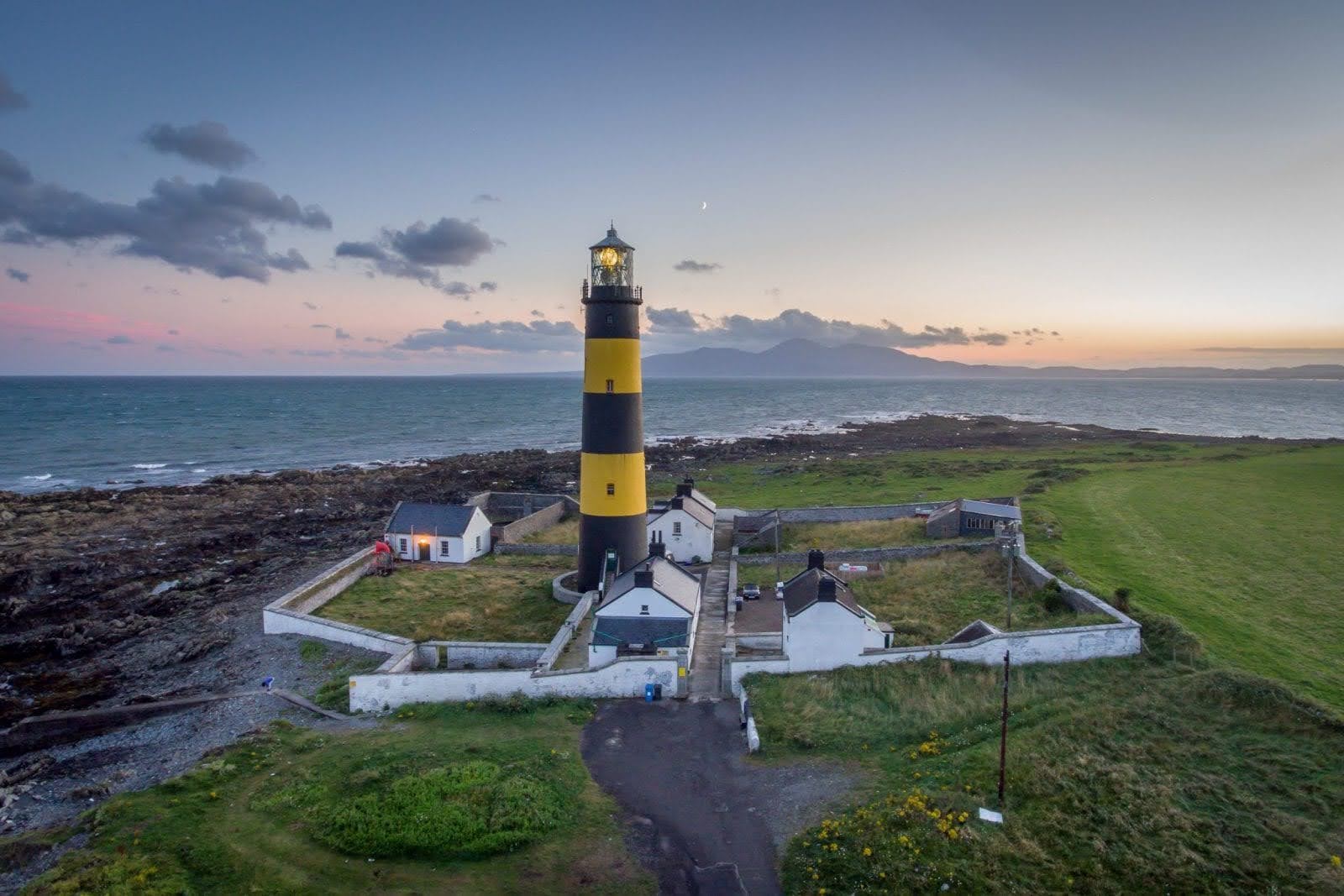
You arrive at the end of a long road, usually after driving for longer than expected. The building appears before the landscape does — a white tower above a headland, or a cluster of keeper’s cottages at the edge of a cliff. The wind is usually already audible before you get out of the car. And then the view opens up, and you understand why people come back to lighthouses year after year.
Ireland has some of the most dramatic lighthouse settings in Europe, shaped by the Atlantic on the west and the Irish Sea to the east. A small number of these historic stations have been carefully restored by Irish Landmark Trust as self-catering holiday properties. Among them, several welcome dogs — making them among the most unusual and memorable dog-friendly stays available anywhere on the island.
This is a guide to those properties: what they offer, what makes them genuinely suited to dogs, and what to think about before you book.
Quick Facts:
Dog-Friendly Lighthouse Stays in Ireland
- Dog-friendly lighthouse properties: Loop Head Lighthouse (Clare), Wicklow Head Lighthouse (Wicklow)
- Pet fee: €30 per dog per stay at all our properties
- Dogs allowed: one dog at most lighthouse properties
- Outdoor space: open headland settings — dogs must be kept on leads and supervised at all times
- What to expect: remote, exposed, dramatic — outstanding for walking
- Car: essential for all lighthouse properties
What Makes Lighthouse Stays Different for Dogs?
Before choosing any accommodation, it is worth thinking about what a lighthouse stay actually involves for a dog — and whether it is the right fit.
The Setting is Open and Exposed
Lighthouses were built at exposed points for a reason. The views are extraordinary, but so is the wind. Most lighthouse properties sit on open headlands with no enclosed garden and no sheltered outdoor area. For dogs, this is actually a significant advantage: the surrounding landscape is wide and open, with coastal paths and headland trails accessible directly from the door.
It also means that the question of enclosed outdoor space, which matters a lot in other settings, works differently here. There is nowhere to let a dog roam freely without supervision. But there is, in most cases, a great deal of open landscape to walk through — which is ultimately more valuable.
Dogs must be kept on a lead at all times at lighthouse properties. The cliff edges and open headlands host livestock and other people exploring the area; keeping your dog on a lead is essential for a safe walk.
The Remoteness is Real
All of our lighthouse properties are genuinely remote. This shapes the experience of staying with a dog in ways that are mostly positive: quiet, uncrowded walking, wide views, and a daily rhythm built entirely around the landscape.
It also means planning ahead for practical things. Grocery shops and vets are rarely within easy reach. Knowing where the nearest vet is before you travel is straightforward but important. Each property page includes this information.
No Other Guests or Shared Spaces
Because these are self-catering stays, your dog has access to the same rooms you do. There are no shared corridors, no hotel lobbies, no other guests to navigate. After a long day walking on headland paths or clifftop trails, you and your dog return to a private space and settle in without any of the friction that comes with a hotel environment.
For dogs that find busy or unpredictable spaces stressful, lighthouse stays are among the most straightforward kinds of dog-friendly accommodation in Ireland.
Related Reading
Dog-Friendly Hotels vs Cottages in Ireland — Why self-catering tends to work better for dogs than hotel stays.
What Does “Dog-Friendly” Actually Mean? How to Know Before You Book — Understanding pet policies before you confirm any booking.
Loop Head Lighthouse, County Clare
Loop Head Lighthouse sits at the very tip of the Loop Head Peninsula in County Clare, one of the least-visited and most dramatic stretches of the western coast.
The lighthouse keeper’s house welcomes dogs and places guests within some of the most striking coastal scenery in Ireland. On the clearest days, the view from the headland takes in the Aran Islands to the north and the mountains of Kerry to the south. On most days, it is simply the Atlantic and the open sky.
What the Walking is Like
The Loop Head Cliff Walk begins at the lighthouse car park, a 2km loop around the moors and cliff edge that is the most direct route from the property. For a longer day, the Loop Head to Kilbaha Loop Walk is a 15km strenuous route following the peninsula’s southern coast to the village of Kilbaha before returning along the northern cliff line. This route passes ringforts, wartime lookout posts, and natural rock formations that make it one of the most geologically interesting coastal walks in Clare.
The wider peninsula offers additional routes. Kilkee, about 20 minutes from the lighthouse, has its own cliff walk taking in the dramatic Pollock Holes and panoramic views. White Strand in Doonbeg, about 25 minutes away, is a sheltered Blue Flag beach ideal for dogs to swim.
For those who want guided exploration, Loop Head Walking Tours offer guided routes across the peninsula and can arrange packed lunches for longer walks.
The Peninsula Setting
Loop Head sits on the quieter, less-visited side of the Wild Atlantic Way. Compared to the Cliffs of Moher, which draw large crowds, the headland here is almost always uncrowded. The roads are quiet, the beaches are rarely busy outside of July and August, and the pace of the place suits the kind of unhurried dog-friendly travel that makes these lighthouse stays worth taking.
The nearest vet is Kilkee Veterinary Clinic on Circular Road, Kilkee, around 20 to 25 minutes from the lighthouse.
Related Reading
7-Day Dog-Friendly Itinerary at Loop Head Lighthouse, County Clare — A full week of walks, beaches and coastal villages on the Loop Head Peninsula.
Wicklow Head Lighthouse, County Wicklow
Wicklow Head Lighthouse occupies one of Ireland’s most striking lighthouse sites, perched on a dramatic headland above the Irish Sea on the east coast.
The property accepts one dog and places guests within easy reach of the Wicklow Way, one of Ireland’s most established long-distance walking routes, as well as the beaches and woodland of Wicklow Mountains National Park.
What the Walking is Like
The headland itself offers immediate walking from the property, with coastal paths giving views north toward Dublin Bay and south along the Wicklow coast. The surrounding area expands the options considerably.
Brittas Bay is one of the most popular beaches on the east coast, about 15 minutes south of Wicklow Head, with a long sandy strand that is dog-friendly outside the busiest summer months. Further inland, the wooded valleys and mountain trails of the Wicklow Mountains provide walking of a very different character — shaded, elevated, and largely quiet.
The town of Wicklow is about 4km from the lighthouse and has basic amenities and services including a vet, making this a slightly more accessible location than some of our more remote properties.
The East Coast Setting
Wicklow Head is well placed for dog owners who want a lighthouse experience without the extreme remoteness of the western properties. The landscape is still dramatic — the lighthouse tower and the cliff views are genuinely striking — but the surrounding area is more connected, with more variety of walking and easier access to towns and services.
For those based elsewhere in Ireland or travelling from Britain, Wicklow Head is also one of the most accessible lighthouse stays, close to Dublin and the ferry routes into Rosslare and Dublin Port.
What to Think About Before Booking a Dog-Friendly Lighthouse
A few practical points are worth thinking through before committing to any of these stays.
Leads are Non-Negotiable
All Irish Landmark Trust lighthouse properties sit in open, exposed settings where dogs must be kept on a lead at all times outside the cottage. Cliff edges, rocky headlands and the presence of livestock on surrounding land make this essential. If your dog is used to significant off-lead exercise, a lighthouse stay can still work well — but the walking will be on-lead throughout. The compensation is the quality and variety of the landscape.
Plan Ahead for Supplies and Vet Access
Rural lighthouse properties are among the most remote in our collection. Grocery shops and vets are typically 20 to 45 minutes away, depending on the property. Each property page lists the nearest vet and the nearest town for supplies. It is worth reading this information and stocking up before you arrive rather than discovering the nearest supermarket is further than expected.
A Car is Essential
None of these lighthouse stays are reachable without a car, and reaching the beaches, walking routes and local services described in this guide also requires driving. There is free parking at all the properties, and most of the walking routes mentioned above have free car parks.
Discover Dog-Friendly Lighthouse Stays in Ireland
For dog owners looking for an experience that is genuinely different from a standard holiday cottage or hotel, a lighthouse stay offers something few places in Ireland can match: a dramatic setting, private space, outstanding walking directly from the door, and the particular atmosphere that comes from sleeping somewhere that has guided ships past headlands for centuries.
The pet policy is clear. The setting does the rest.
Further Reading
7-Day Dog-Friendly Itinerary at Loop Head Lighthouse, County Clare — A full week of clifftop walks, beaches and coastal villages on the Loop Head Peninsula.
Dog-Friendly Coastal Breaks in Ireland — The best coastal regions and stays for dogs and their owners across Ireland.
Can You Stay Somewhere Truly Unique With a Dog? — Lighthouses, gate lodges, Gothic towers and other historic dog-friendly stays in Ireland.
How Much Does It Cost to Bring a Dog on Holiday in Ireland? — A practical guide to pet fees and what to budget for.
FAQs: Dog-Friendly Lighthouse Stays in Ireland
Can you stay in a lighthouse in Ireland with a dog?
Yes. Two Irish Landmark Trust lighthouse properties welcome dogs: Loop Head Lighthouse in County Clare and Wicklow Head Lighthouse in County Wicklow, Always check the individual property page before booking, as not every cottage at a lighthouse station accepts dogs.
How many dogs are allowed in a lighthouse stay?
It depends on the property. The number is listed on each property page, and the full pet policy is available before booking.
What is the pet fee for a lighthouse stay at Irish Landmark Trust?
The pet fee is €30 per dog per stay, regardless of the length of your visit. This is a flat rate stated clearly before you confirm the booking.
Are lighthouse grounds enclosed for dogs?
No. Our lighthouse properties sit on open headlands. There are no enclosed gardens or secure outdoor areas. Dogs must be kept on a lead and supervised at all times outside the cottage.
What is the walking like near Irish Landmark Trust lighthouse properties?
All our lighthouse properties are positioned in coastal or headland settings with walking available from or close to the property. Routes vary from short cliff walks of 2km to longer looped trails of 15km or more. The quality and drama of the scenery is consistently high across both locations.
Are lighthouse stays suitable for large dogs?
Yes. The open headland settings of lighthouse properties tend to suit larger breeds well, with plenty of space on coastal paths and no shared indoor areas to navigate. Dogs must be kept on a lead throughout.
Do I need a car to stay at a lighthouse property in Ireland?
Yes. All our lighthouse properties are in remote locations that require a car for access. Nearby towns, beaches and walking routes also generally require driving. Parking is free at all properties.
Which Irish Landmark Trust lighthouse is best for dogs?
Both dog-friendly lighthouse properties offer excellent walking and open coastal settings. Loop Head is the most remote and dramatically western. Wicklow Head is the most accessible from Dublin. The right choice depends on where you are travelling from and what kind of landscape you want.